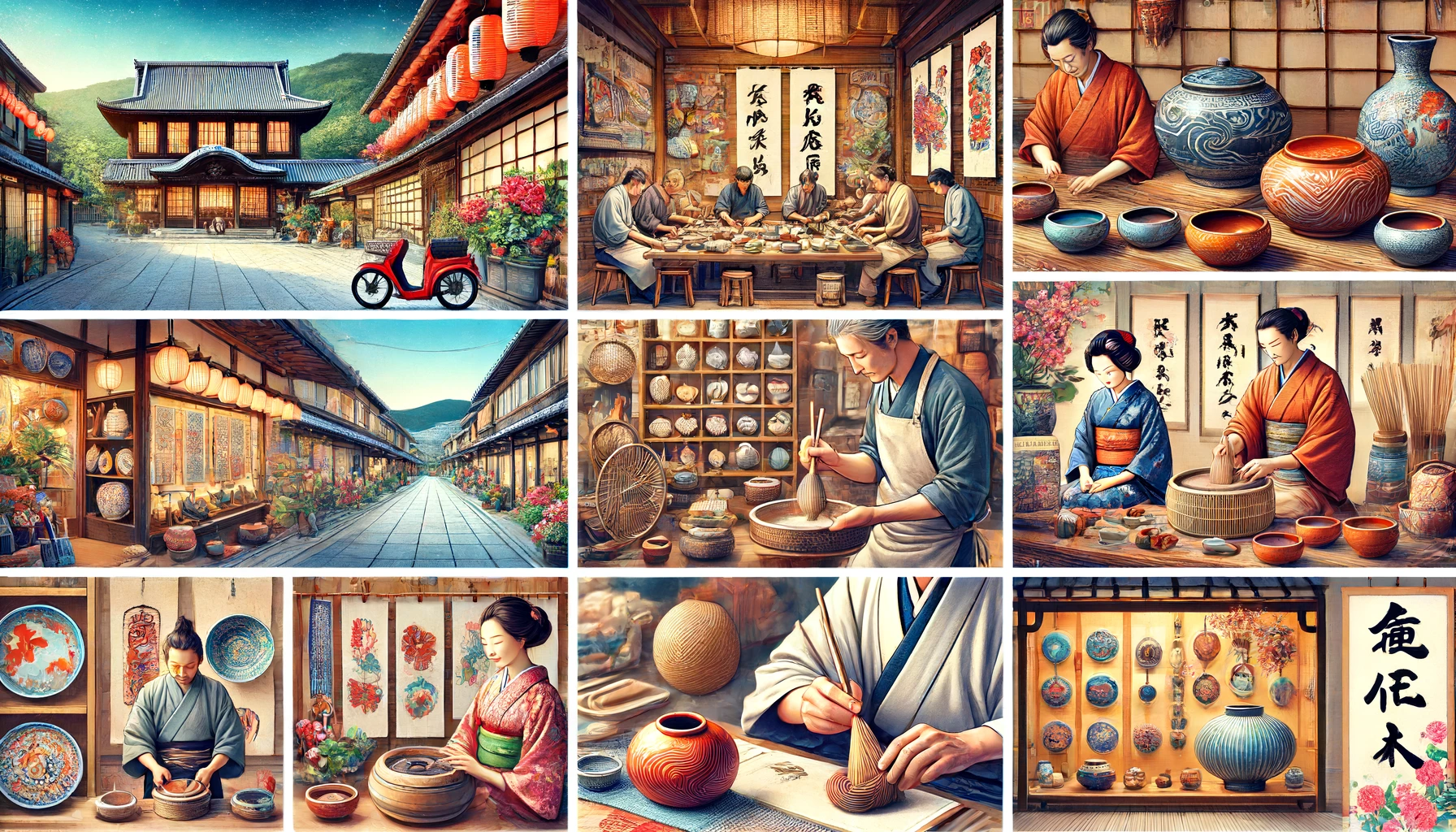
Kyoto, a city celebrated for its profound historical and cultural heritage, is also a bastion of traditional Japanese crafts. From the delicate art of kimono weaving to the precise skills required in woodworking and ceramics, Kyoto’s craftsmen have preserved techniques that date back centuries. This guide explores where you can learn about and purchase these traditional crafts, providing a hands-on connection to Kyoto’s artisanal legacy.
The Art of Kimono Weaving at Nishijin Textile Center
Experience and Purchase: The Nishijin Textile Center in the historic Nishijin district is the heart of Kyoto’s textile industry. Visitors can watch live demonstrations of kimono weaving, an intricate and labor-intensive process that results in some of the world’s most beautiful garments. The center also offers workshops where participants can try their hand at weaving and dyeing techniques.
More Information: Nishijin Textile Center Official Site
Kyoto Ceramics: Kiyomizu Pottery
Experience and Purchase: The area around Kiyomizu Temple is famous for Kiyomizu-yaki, a type of Kyoto ceramic known for its vibrant colors and elaborate designs. Many studios in the Gojozaka area offer pottery classes and sell exquisite ceramic pieces, perfect for gifts or personal keepsakes.
Explore Pottery Shops: Gojozaka Pottery Association
Woodworking: The Craft of Japanese Joinery

Experience and Purchase: Traditional Japanese carpentry, known for its complex joinery and absence of nails, can be explored at workshops like those offered by the Kyoto Handicraft Center. Visitors can also purchase handcrafted wooden items, from furniture to smaller decorative objects that exemplify this meticulous craft.
Learn More: Kyoto Handicraft Center Workshops
Gold Leaf Gilding: Learning at Kinkaku-ji
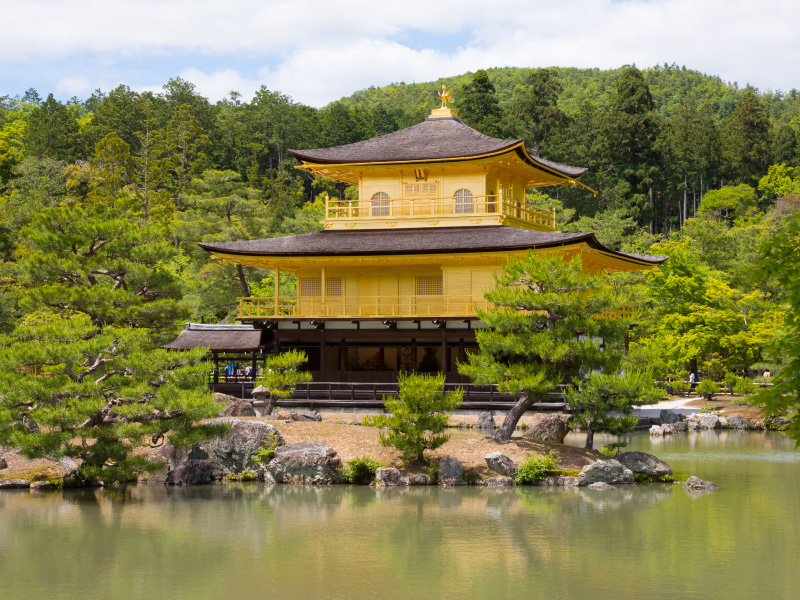
Experience and Purchase: The golden pavilion of Kinkaku-ji is perhaps Kyoto’s most famous example of gold leaf gilding. Nearby, studios and shops offer workshops where visitors can learn the art of applying gold leaf and purchase gilded artifacts that shine with a touch of Kyoto’s iconic gold.
Visit Kinkaku-ji: Kinkaku-ji Temple Information
Yuzen Dyeing: The Beauty of Kyoto Silk
Experience and Purchase: Yuzen dyeing, known for its intricate designs and vibrant colors on silk, is a prominent feature of Kyoto’s traditional crafts scene. Several studios in Kyoto offer workshops where visitors can learn the yuzen dyeing process and create their own silk handkerchiefs or scarves.
Experience Yuzen Dyeing: Marumasu Nishimuraya Yuzen Workshop
Kyoto Lacquerware: The Sheen of Urushi
Experience and Purchase: Kyoto is also renowned for its lacquerware, known as Kyoto Shikki. These pieces, often decorated with gold or silver maki-e, are durable and elegantly beautiful. Workshops allow visitors to understand the painstaking process of lacquer application and offer a range of lacquerware for purchase.
Find Lacquerware: Kyoto Lacquerware Online
Conclusion
The traditional crafts of Kyoto are not merely products but are stories woven, dyed, carved, and painted by the hands of master artisans. Engaging with these crafts provides a deeper understanding of Kyoto’s culture and offers a unique opportunity to take part of this ancient city home.
Comments