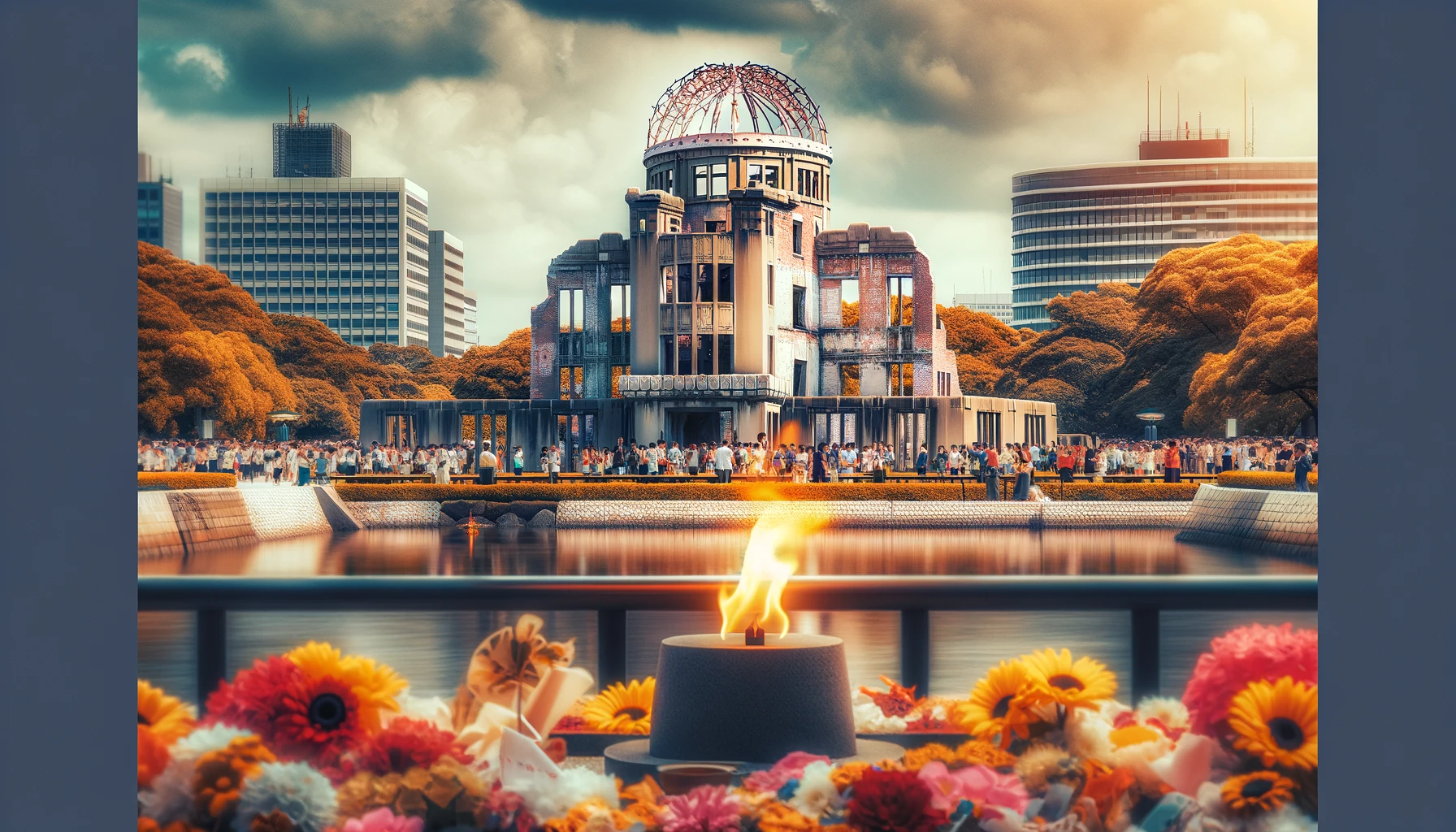
Hiroshima’s Peace Memorial Park stands as a profound symbol of the resilience of the human spirit and the universal desire for peace. Situated at the epicenter of the atomic bomb attack on August 6, 1945, this park is not just a memorial to the victims, but also a commitment to world peace and a reminder of the horrors of war. The park, with its various monuments, museums, and annual peace ceremonies, attracts visitors from around the globe, making it a place of international significance.
The Heart of the Park: The Atomic Bomb Dome
The most iconic feature of the Hiroshima Peace Memorial Park is the Atomic Bomb Dome. Originally the Hiroshima Prefectural Industrial Promotion Hall, the building was one of the few structures to remain standing near the bomb’s hypocenter. Today, it remains preserved in its skeletal state, a haunting reminder of that fateful day and a powerful symbol of endurance. This site was designated a UNESCO World Heritage Site in 1996, underscoring its global importance as a peace monument.
Learn more about the dome: UNESCO – Atomic Bomb Dome
The Hiroshima Peace Memorial Museum
Adjacent to the park, the Hiroshima Peace Memorial Museum offers visitors insights into the devastating effects of the bomb on Hiroshima’s people and infrastructure. The museum also serves as a place of education about the dangers of nuclear weapons and the absolute necessity of peace. Exhibits include personal items salvaged from the aftermath, photos that depict the scale of destruction, and stories of the survivors.
Visit the museum virtually or plan your trip: Hiroshima Peace Memorial Museum
Cenotaph for the A-Bomb Victims
Another significant feature within the park is the Cenotaph for the A-Bomb Victims, an arched tomb that holds the names of all known victims of the bomb. The cenotaph carries a poignant inscription: “Let all the souls here rest in peace; for we shall not repeat the evil.” This aligns directly with the park’s mission to advocate for peace and ensure that such a tragedy never occurs again.
Children’s Peace Monument
This monument was inspired by the story of Sadako Sasaki, a young girl who died from leukemia caused by the bomb’s radiation. Sadako is remembered through the thousands of origami cranes she folded before her death, a symbol of peace and hope. Today, the monument is adorned with thousands of paper cranes sent by people from around the world.
Learn Sadako’s story: Children’s Peace Monument
The Flame of Peace and Peace Bell
The Flame of Peace, designed to burn until all nuclear bombs on the planet are destroyed, and the Peace Bell, which visitors can ring in prayer for everlasting peace, are both powerful symbols within the park. They provide a place for reflection and a direct engagement with peace advocacy.
Conclusion
Hiroshima’s Peace Memorial Park is more than just a site of historical significance; it is a vibrant reminder of what was lost and an enduring symbol of hope and recovery. It serves as a pivotal education tool, imparting the values of peace and the importance of human life to each visitor. As we reflect on the lessons from Hiroshima, the park stands as a testament to the possibility of recovery and the power of peace.
For more detailed exploration and visitor information, please consider visiting the official Hiroshima City website or the park’s dedicated educational resources. This site not only offers a journey through a pivotal moment in history but also a continued promise to future generations.
Comments