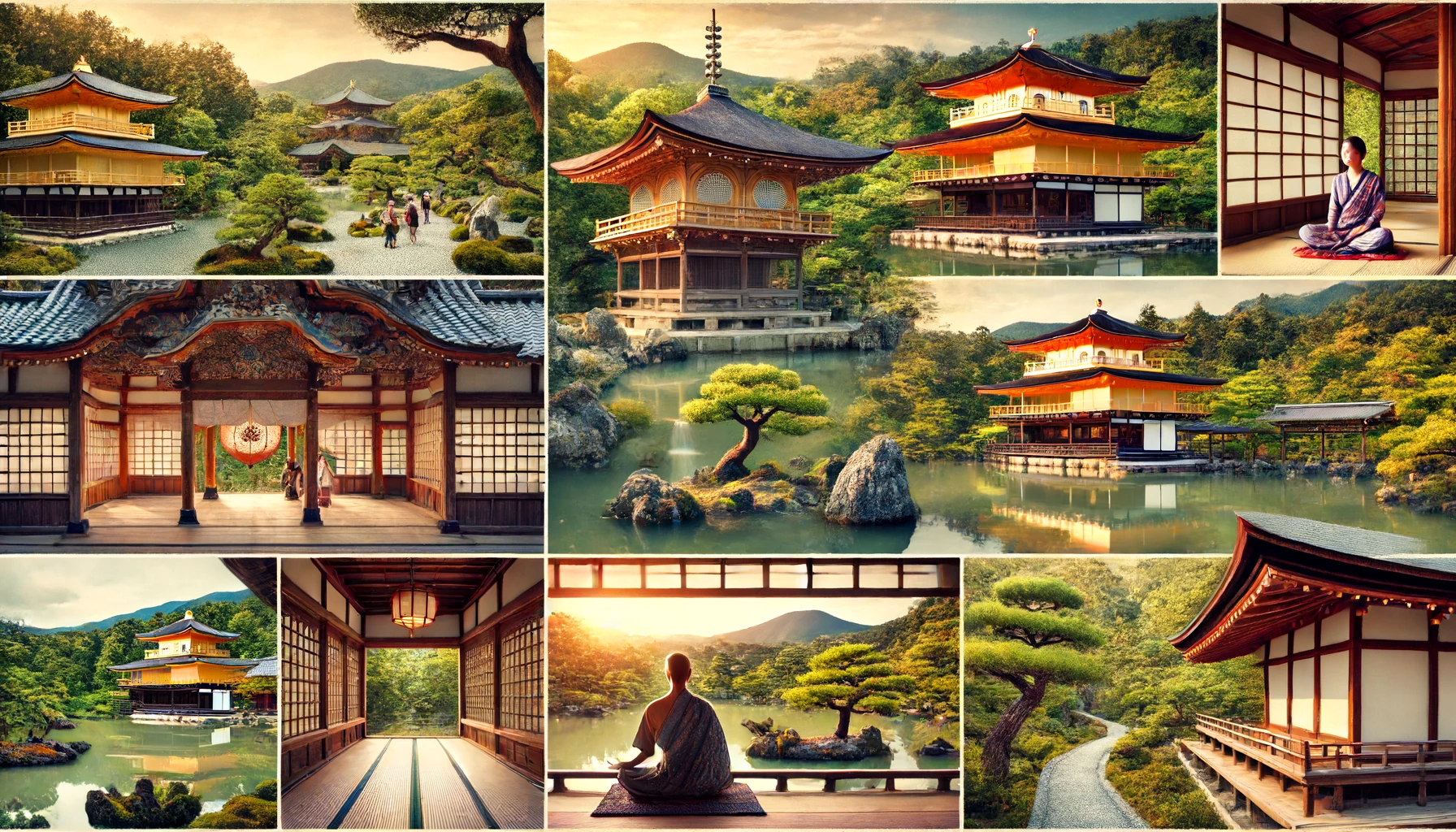
Kyoto, a city that resonates with the spiritual heartbeat of Japan, is home to over 1,600 Buddhist temples, each offering a unique gateway to peace and reflection. This ancient city not only holds the history of over a millennium but also provides serene landscapes and architectural marvels that invite visitors to step away from the hustle and bustle of modern life and journey into tranquility. In this blog, we embark on a spiritual journey through some of Kyoto’s most peaceful temples, exploring their histories, features, and the quiet solace they offer.
The Majestic Kinkaku-ji: The Golden Pavilion
Kinkaku-ji, or the Golden Pavilion, is perhaps one of the most visually striking temples in Kyoto. Covered in brilliant gold leaf that shines across the reflecting pond, this Zen temple stands as a testament to the lavish aesthetics of Japanese culture. The surrounding garden and the calm waters epitomize the peaceful environment that characterizes Kyoto’s temple sites.
More about Kinkaku-ji: Kinkaku-ji Temple Guide
The Zen Harmony of Ryoan-ji
Famous for its karesansui (dry landscape) garden, Ryoan-ji invites contemplation through its 15 meticulously placed rocks set in fine white gravel, raked to perfection. The simplicity and elegance of the garden encourage visitors to reflect and find peace within themselves, making it a pinnacle of Zen garden design.
Explore Ryoan-ji: Ryoan-ji Official Site
The Spiritual Retreat of Kiyomizu-dera
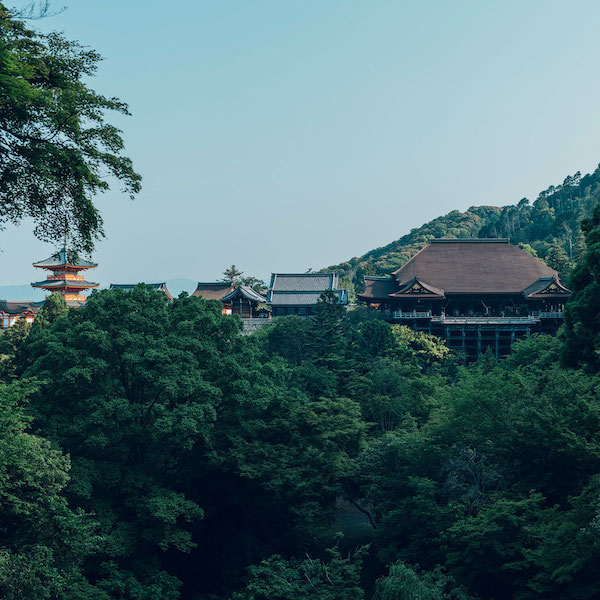
Perched on the side of Otowa Mountain, Kiyomizu-dera is known for its wooden stage that juts out over cherry and maple trees. This temple is associated with the Kannon Bodhisattva and offers stunning views across Kyoto. The waters of the Otowa Waterfall, located at the base of the temple, are believed to have therapeutic properties, adding to the spiritual allure of Kiyomizu-dera.
Visit Kiyomizu-dera: Kiyomizu-dera Temple Experience
The Healing Serenity of Sanjusangen-do
Home to 1,001 statues of Kannon, the goddess of mercy, Sanjusangen-do offers an awe-inspiring perspective on the craftsmanship and spiritual depth of Kyoto. The long hall, filled with rows of serene Kannon statues, provides a meditative atmosphere that is both profound and peaceful.
Learn about Sanjusangen-do: Sanjusangen-do Official
The Mossy Enclave of Saiho-ji
Known colloquially as Kokedera, or the Moss Temple, Saiho-ji boasts a garden that features over 120 types of moss. The lush green carpet and the serene pond at its center create a tranquil and somewhat otherworldly atmosphere, perfect for those seeking solace and a moment of quiet reflection.
Visit Saiho-ji: Saiho-ji Official Website
The Forest Temple of Tofuku-ji
Especially famous in autumn for its vibrant foliage, Tofuku-ji Temple is a historic Zen temple that features one of the oldest surviving Sanmon gates in Japan. The temple’s vast grounds are an ideal place for a peaceful walk, enveloped by the sounds of nature and the beauty of its gardens.
Explore Tofuku-ji: Tofuku-ji Temple Details
The Intimate Charm of Nanzen-ji

At the foot of Kyoto’s eastern mountains lies Nanzen-ji, a Zen temple known for its imposing Sanmon gate, which offers panoramic views of the city. The temple’s aqueduct, part of a Meiji period canal system, passes through its grounds, adding a unique architectural element to the scenic beauty.
Discover Nanzen-ji: Nanzen-ji Official Website
Conclusion
Each temple in Kyoto tells a story of faith, beauty, and tranquility, offering a sanctuary where one can find peace and spiritual renewal. These temples, with their diverse histories and serene landscapes, provide a profound experience that goes beyond mere sightseeing.
Comments