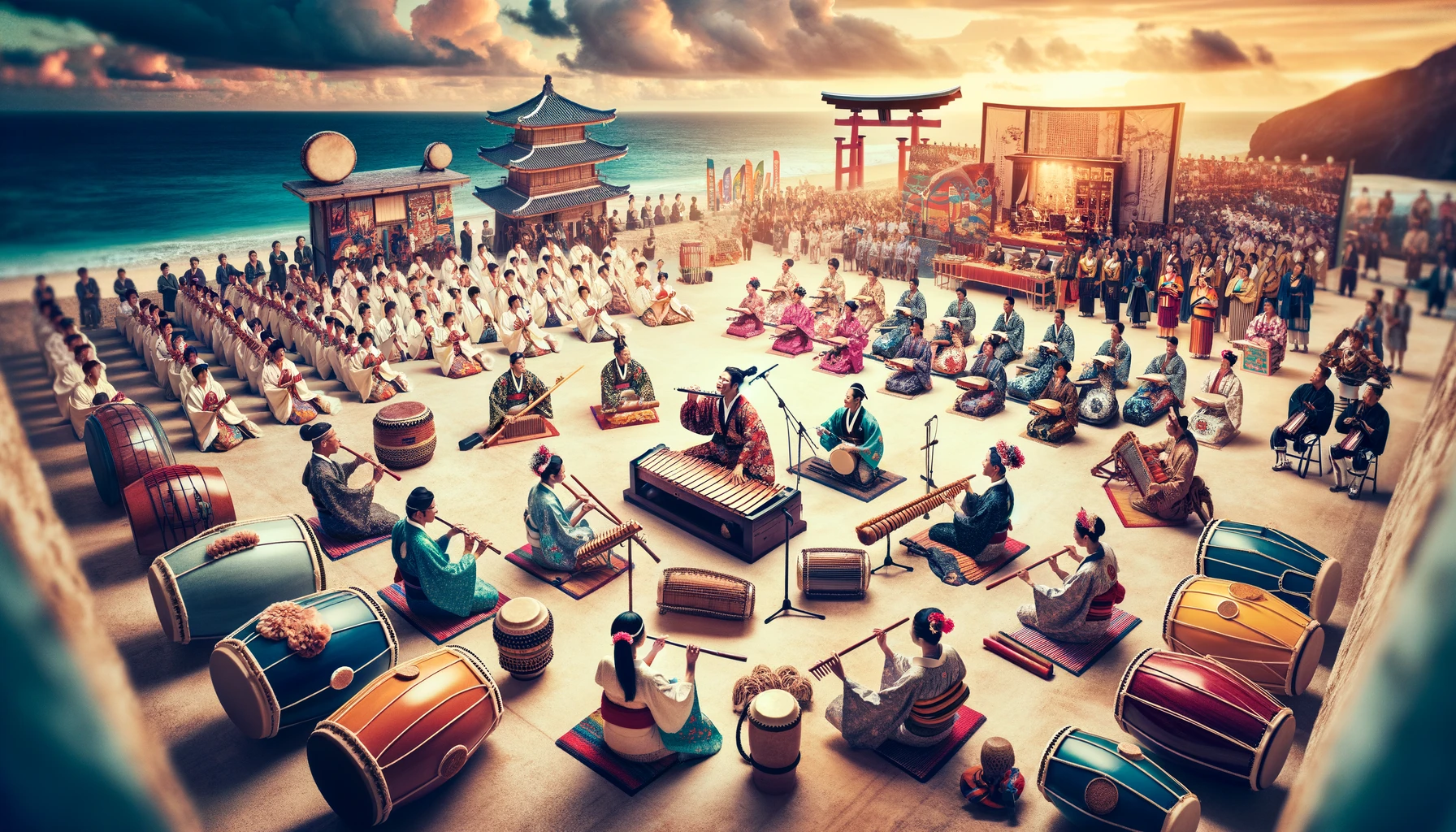
Okinawa, the southernmost prefecture of Japan, boasts a rich and vibrant cultural heritage that is distinctly different from that of mainland Japan. Among its most celebrated traditions are its unique forms of music and dance, which have evolved over centuries. These artistic forms not only entertain but also convey the history, emotions, and spirit of the Okinawan people. This article delves into the traditional music and dance of Okinawa, exploring their origins, styles, and the roles they play in contemporary Okinawan society.
The Roots of Okinawan Music
Experience: Okinawan music, or “Ryukyu music,” traces its origins back to the Ryukyu Kingdom era, where it was influenced by trade and cultural exchanges with China, Southeast Asia, Korea, and Japan. This unique blend of influences has given birth to a distinctive sound characterized by the sanshin, a three-stringed lute similar to the Japanese shamisen.
Highlight: Traditional instruments like the sanshin, taiko (drums), and various flutes play pivotal roles in Okinawan musical performances.
Traditional Okinawan Dance
Experience: Okinawan dance, known as Ryukyu Buyo or Eisa, is another crucial component of the islands’ cultural heritage. These dances often accompany traditional music and are performed during various community events and festivals.
Highlight: Eisa, a drum-dancing performance, is particularly famous and is a highlight during the Obon festival, where it is performed to honor and celebrate the spirits of ancestors.
Famous Okinawan Songs and Their Significance
Experience: Songs like “Tinsagu nu Hana” and “Asadoya Yunta” are staples in the Okinawan musical repertoire, each telling stories or imparting lessons that reflect Okinawan life and philosophy.
Highlight: “Tinsagu nu Hana” teaches the values of filial piety and respect through its lyrics, which is a central tenet in Okinawan culture.
Modern Okinawan Music
Experience: In recent years, Okinawan music has seen a fusion with contemporary genres, giving rise to popular bands and artists like BEGIN and Shoukichi Kina who blend traditional Okinawan sounds with modern influences like rock, pop, and reggae.
Highlight: These modern adaptations have helped Okinawan music reach a broader audience, both in Japan and internationally.
Festivals and Live Performances
Experience: Okinawa hosts numerous festivals where music and dance performances are central attractions. The Okinawa Festival, held annually, showcases a wide array of traditional and modern musical performances.
Highlight: Attending the Naha Hari Festival or the Okinawa Eisa Matsuri provides visitors with an opportunity to experience these performances live, set against the backdrop of festive celebrations and local hospitality.
Conclusion
Okinawan music and dance are more than just art forms; they are living expressions of the island’s history, soul, and community life. They play a vital role in preserving the cultural identity of Okinawa and continue to evolve while staying rooted in tradition.
Whether experienced through the emotional strumming of a sanshin at a small local bar or through vibrant dance performances at a bustling festival, the music and dance of Okinawa offer a deep, resonant connection to the heart of these beautiful islands.
Comments